
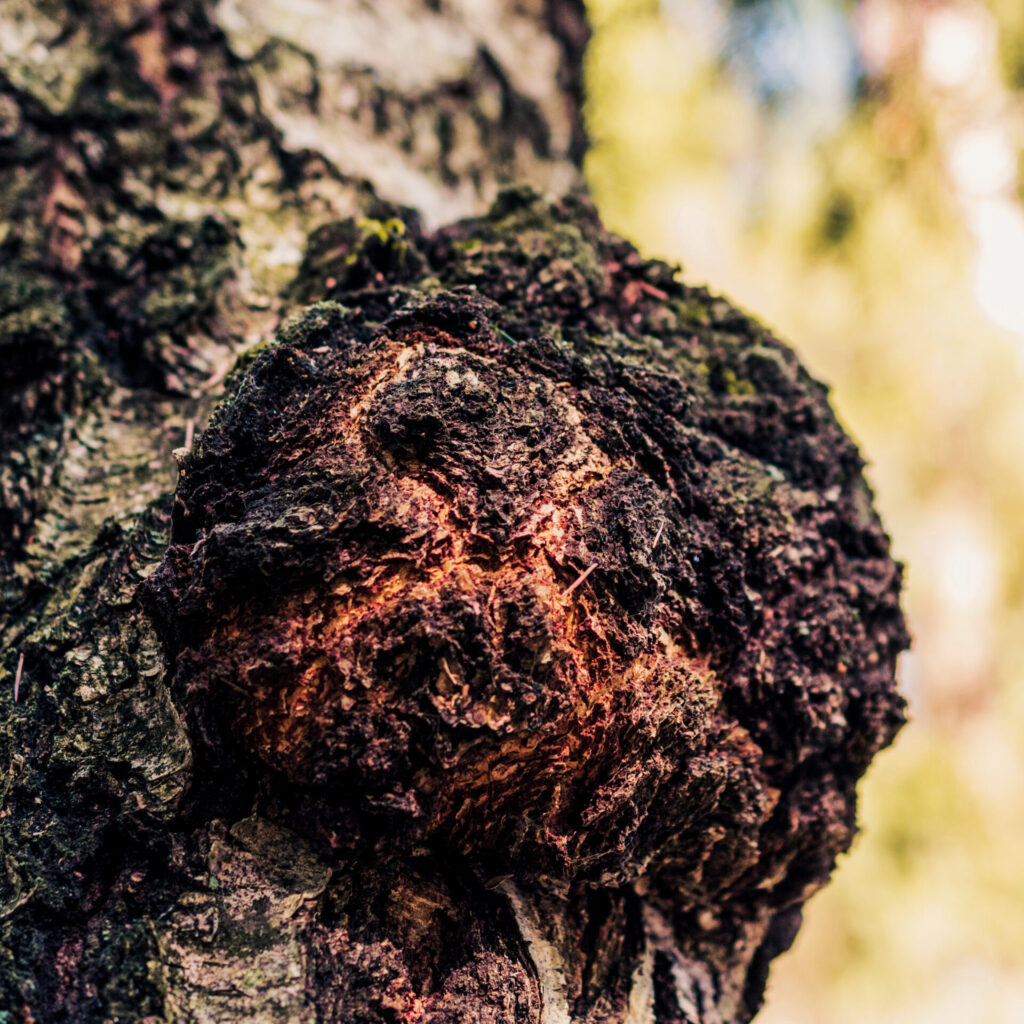
Chaga is a wild mushroom that grows primarily on birch trees throughout Northern Europe, Russia, Siberia and parts of Asia. Recognized for its dark, rugged appearance, it develops over many years and can be found growing on living trees in some of the coldest forest environments on Earth.
Across Siberia, Russia and Northern Europe, Chaga was traditionally prepared as a tea or decoction and consumed throughout the long winter months. Its close connection to birch forests made it a familiar part of daily life among local communities, herbal practitioners and indigenous peoples. While its history stretches back centuries, Chaga continues to be enjoyed as a beverage today and has found renewed popularity as a coffee alternative in drinks such as the “Chagaccino”, considered the most trendy drink of 2022.
Known as the “King of Medicinal Mushrooms” in Nordic herbal traditions, Chaga has become deeply rooted in the cultural history of Northern regions. In Russia and parts of Eastern Europe, it was widely used in folk medicine and became particularly associated with the treatment of digestive disorders, tuberculosis and cancer. Within some Sami traditions, Chaga was regarded as a sacred drink and considered a powerful forest spirit. Similar traditions surrounding Chaga also developed among Indigenous peoples of North America, where the mushroom was prepared as a tea and valued as part of traditional healing practices.
Chaga is particularly notable for its naturally occurring polyphenols, melanin and other antioxidant compounds. A 2020 review examining the bioactive properties of Chaga highlighted laboratory analyses reporting ORAC (Oxygen Radical Absorbance Capacity) values exceeding 50,000 μmol TE per 100 grams. For comparison, commonly cited ORAC values for blueberries range from approximately 4,500–9,000 μmol TE per 100 grams, while raw cacao powder typically ranges between 30,000–40,000 μmol TE per 100 grams. These findings have contributed to Chaga’s reputation as one of the most antioxidant-rich mushrooms studied to date.
Its combination of traditional use, cultural significance and exceptional antioxidant content has helped establish Chaga as one of the most recognized mushrooms within northern herbal traditions.
Chaga is featured in Glow Bite — a ritual bar inspired by vitality, radiance and inner glow.
DISCLAIMER
The information provided in The Herbal Library is intended for educational purposes only and should not be interpreted as medical advice. Our products are not intended to diagnose, treat, cure or prevent any disease.
REFERENCES
 EN
EN  NO
NO