
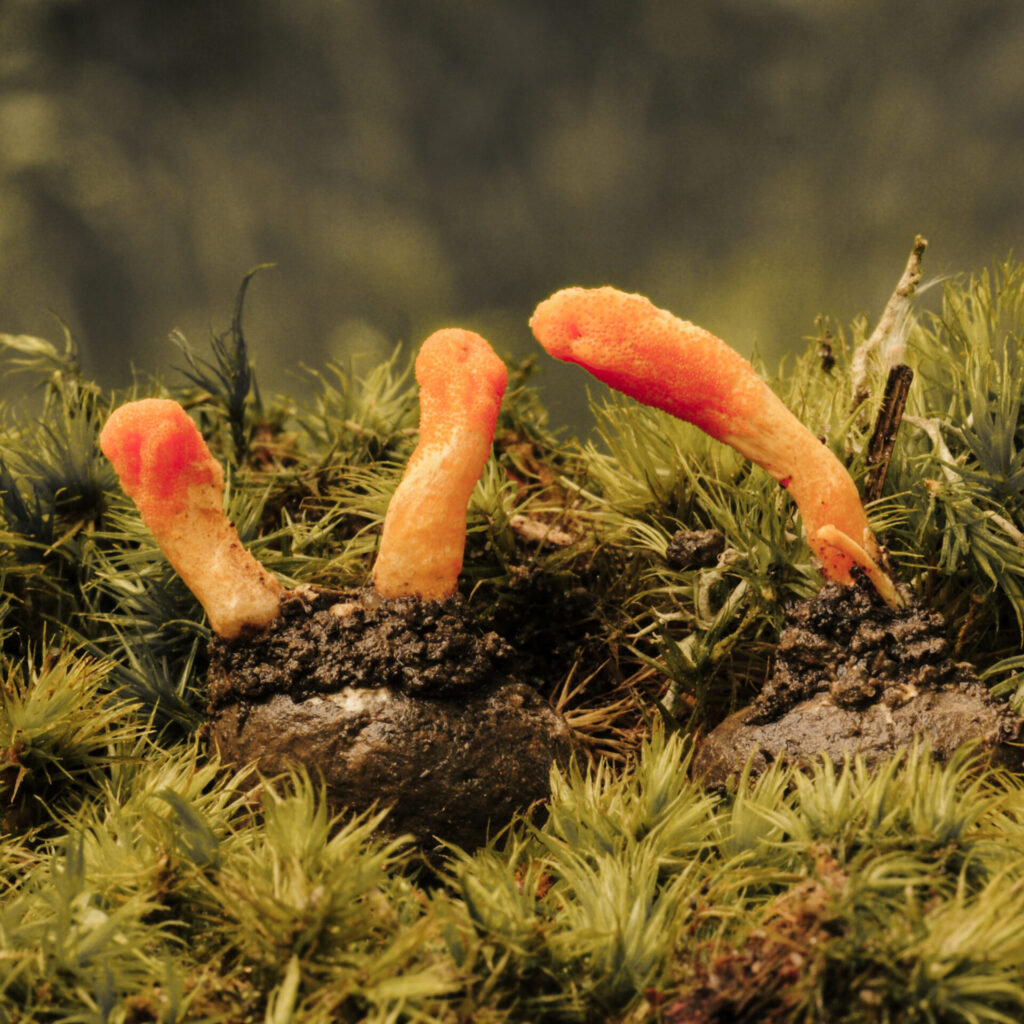
Cordyceps is a mushroom traditionally associated with the high-altitude regions of Tibet, Nepal, Bhutan and parts of China. Unlike most mushrooms, wild Cordyceps develops through a parasitic relationship with insect larvae, giving it one of the most unusual life cycles in the fungal kingdom.
For centuries, Cordyceps was incorporated into traditional Chinese and Tibetan practices, where it became associated with vitality, endurance and resilience. Its unique biology and limited availability in the wild contributed to its reputation as a highly valued ingredient within traditional herbal culture. In parts of the Himalayan region, Cordyceps became so prized that it earned the nickname “Himalayan Gold.”
Cordyceps gained international attention in 1993 when a group of Chinese female distance runners broke multiple world records. Their coach, Ma Junren, attributed part of their success to an intensive training regime and a proprietary tonic containing Cordyceps. The story introduced Cordyceps to a global audience and contributed to growing interest in the mushroom beyond Asia.
Scientific interest in Cordyceps has focused on naturally occurring compounds such as cordycepin and adenosine, as well as their potential role in energy metabolism and exercise physiology. In a randomized, double-blind, placebo-controlled study, participants consuming a Cordyceps militaris supplement for three weeks demonstrated improvements in measures of aerobic performance, including VO₂max and time to exhaustion, compared to the placebo group. The findings contributed to growing scientific interest in Cordyceps and its potential role in physical performance.
Its combination of traditional use, cultural significance and scientific research has helped establish Cordyceps as one of the most recognized mushrooms within both herbal traditions and functional foods.
Cordyceps is featured in Power Bite — a ritual bar inspired by movement, momentum and physical performance.
DISCLAIMER
The information provided in The Herbal Library is intended for educational purposes only and should not be interpreted as medical advice. Our products are not intended to diagnose, treat, cure or prevent any disease.
REFERENCES
 EN
EN  NO
NO