
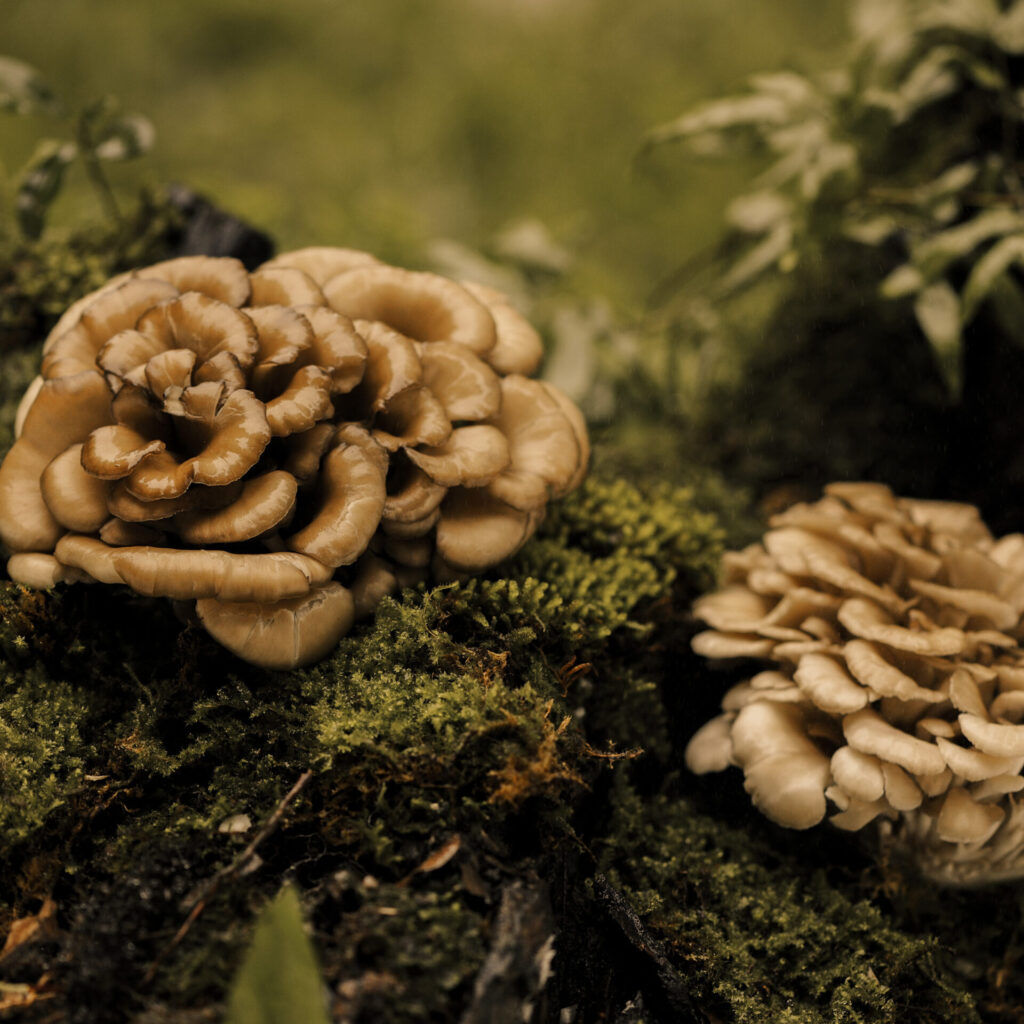
Maitake is an edible mushroom native to the temperate forests of Japan, China and North America. It grows in large clusters at the base of hardwood trees, particularly oak, and can reach impressive sizes in the wild.
For centuries, Maitake has been consumed as both a food and a functional mushroom throughout East Asia. Its rich flavor made it a valued culinary ingredient, while its reputation among foragers helped inspire the cultural stories that continue to surround it today.
In Japan, Maitake is commonly known as the “Dancing Mushroom.” According to tradition, foragers who discovered Maitake in the wild would celebrate by dancing. Given the mushroom’s value and desirability, finding a large cluster was considered a rare and fortunate event. The nickname remains one of the most recognizable parts of Maitake’s cultural history.
Scientific interest in Maitake has focused on naturally occurring polysaccharides, particularly beta-glucans and a group of compounds known as the D-fraction. In a clinical study conducted at Memorial Sloan Kettering Cancer Center in New York, researchers examined the effects of Maitake D-fraction supplementation in women with breast cancer and reported increased activity in certain immune cells, including natural killer (NK) cells. The findings contributed to growing scientific interest in Maitake and its interaction with the immune system.
In addition to immune-related research, Maitake has also been studied for its potential role in glucose metabolism. Several animal studies have reported improvements in blood glucose levels and insulin sensitivity following Maitake supplementation, contributing to ongoing research into the mushroom’s metabolic effects.
Maitake reflects our fascination with medicinal mushrooms and the traditions that continue to inspire nature’s apothecary.
DISCLAIMER
The information provided in The Herbal Library is intended for educational purposes only and should not be interpreted as medical advice. Our products are not intended to diagnose, treat, cure or prevent any disease.
REFERENCES
 EN
EN  NO
NO