
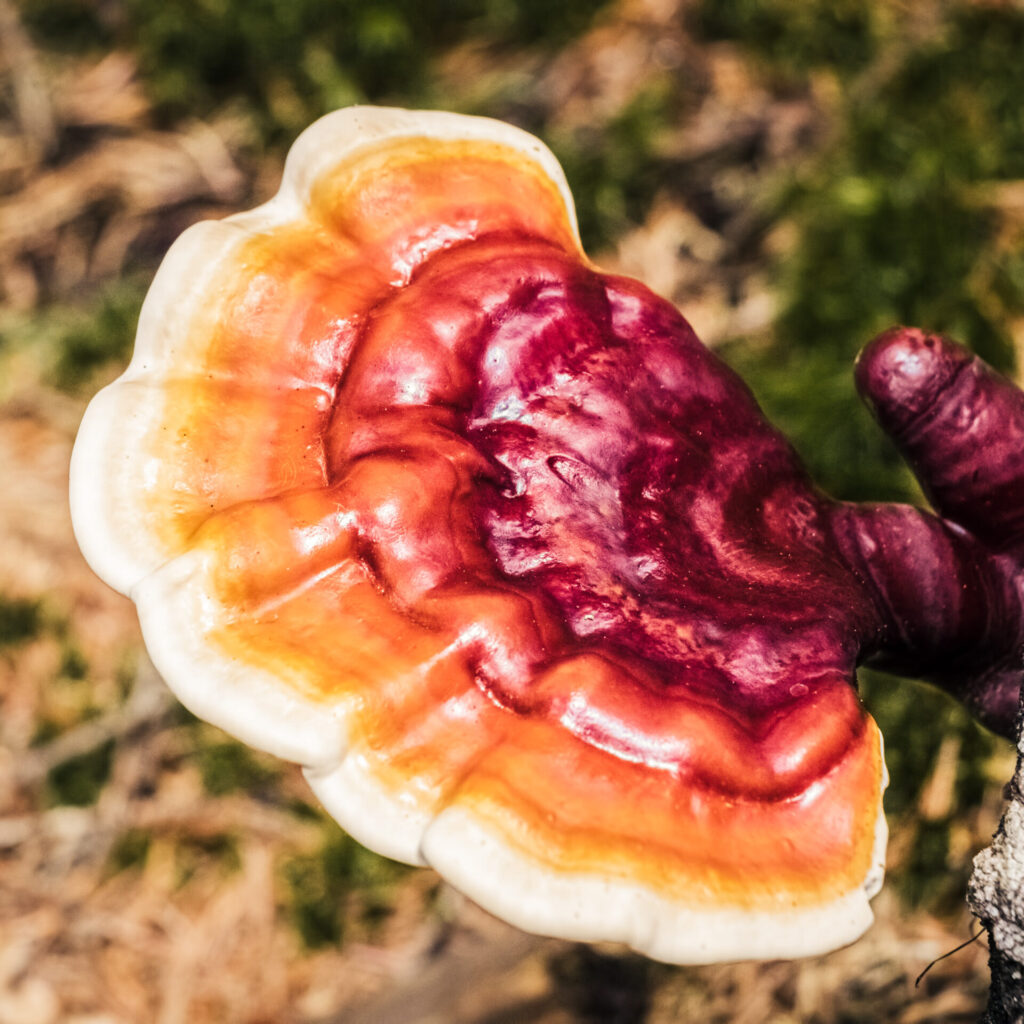
Reishi is a distinctive mushroom recognized for its glossy red appearance and woody texture. Native to Asia and found growing on hardwood trees, it has been used for thousands of years and remains one of the most culturally significant mushrooms in the world.
For thousands of years, Reishi has held a unique place within Traditional Chinese Medicine and East Asian herbal culture. Highly valued for its rarity and cultural significance, it became one of the most respected ingredients in Chinese herbalism.
Often referred to as the “Mushroom of Immortality,” Reishi was traditionally associated with vitality, longevity and spiritual wellbeing. Due to its scarcity in the wild, it was once reserved for emperors, nobility and skilled herbal practitioners, contributing to its legendary status throughout East Asian culture.
Scientific interest in Reishi has focused on its unique composition of triterpenes, polysaccharides and beta-glucans. In a randomized, double-blind, placebo-controlled study conducted in China in 2005, individuals experiencing fatigue associated with neurasthenia received either Reishi extract or a placebo for eight weeks. Participants receiving Reishi reported greater improvements in fatigue and wellbeing compared to the placebo group. The findings contributed to growing scientific interest in Reishi and its traditional association with vitality and restoration.
Its combination of traditional use, cultural significance and scientific research has helped establish Reishi as one of the most recognized mushrooms within both herbal traditions and functional foods.
Reishi is featured in Zen Bite — a ritual bar inspired by calm, balance and restoration.
DISCLAIMER
The information provided in The Herbal Library is intended for educational purposes only and should not be interpreted as medical advice. Our products are not intended to diagnose, treat, cure or prevent any disease.
REFERENCES
 EN
EN  NO
NO