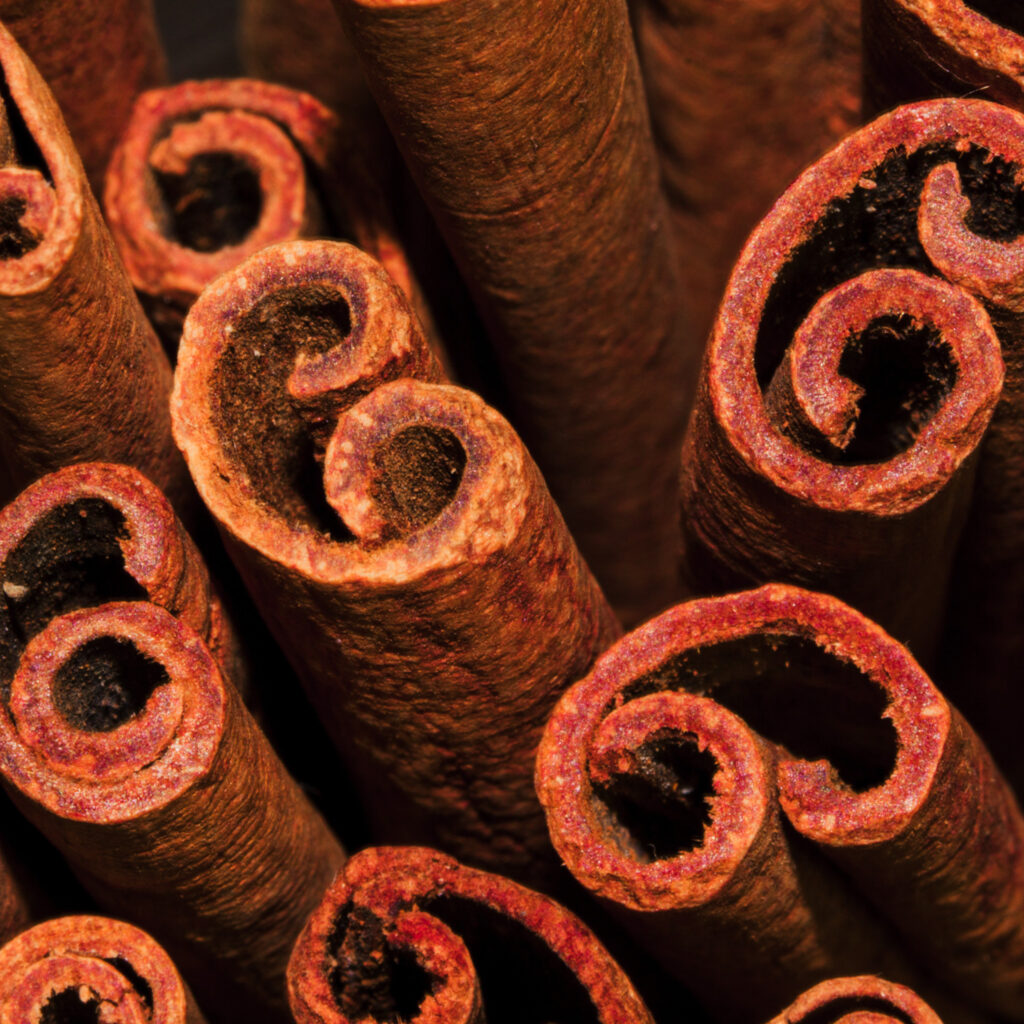
Cinnamon (Cinnamomum verum) is an evergreen tree native to Sri Lanka and parts of Southern India, cultivated for its aromatic inner bark. Once harvested, the bark naturally curls into the familiar quills as it dries. Cinnamon has been valued for thousands of years as both a culinary spice and a botanical ingredient, with cinnamaldehyde responsible for much of its characteristic flavour and aroma.
Cinnamon has been used in traditional medicine and cuisine for more than 4,000 years. It was highly prized in ancient Egypt, where it was used in perfumes, ceremonial preparations and the embalming process. Through expanding trade routes, cinnamon became one of the world’s most valuable spices and was later incorporated into Traditional Chinese Medicine and Ayurveda, where it was traditionally used as a warming herb to support digestion and circulation.
Scientific research has investigated cinnamon for its potential effects on blood sugar regulation. In a systematic review and meta-analysis published in the Annals of Family Medicine, researchers found that cinnamon supplementation was associated with modest reductions in fasting blood glucose among people with type 2 diabetes.
Cinnamon is found in Zen Bite — a ritual bar created for moments of calm.
DISCLAIMER
The information provided in The Herbal Library is intended for educational purposes only and should not be interpreted as medical advice. Our products are not intended to diagnose, treat, cure or prevent any disease.
REFERENCES